Laser cutting has become the default choice for precision metal fabrication in defense, medical, semiconductor, and telecom manufacturing. It's the process behind tight-tolerance brackets, custom enclosures, and rack chassis components that need to fit right the first time.
This guide breaks down what laser cutting actually is, how the machines work, the different laser types available, and where the technology gets used in real production environments.
Key Takeaways
- A focused, high-energy beam melts or vaporizes metal along a CNC-controlled path
- Fiber lasers now dominate fabrication with faster speeds and lower costs
- Assist gases such as oxygen, nitrogen, and air shape edge quality and speed
- Applications include defense electronics, medical devices, and telecom chassis
- Thickness capacity depends on laser power and type, not a fixed number
What Is Laser Cutting Technology?
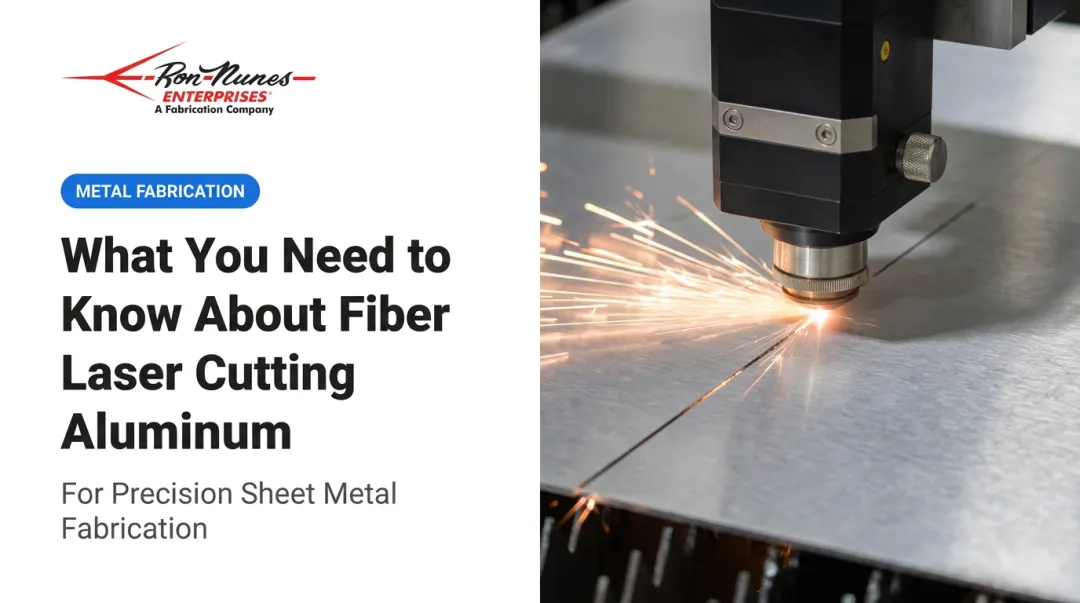
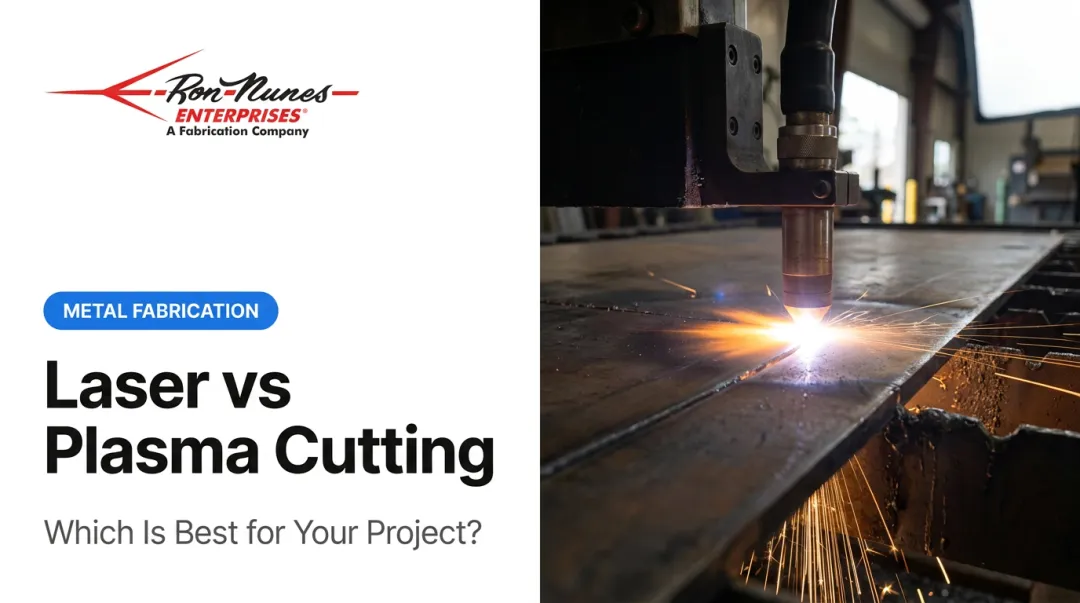
Laser cutting is a thermal machining process. A high-energy, focused beam of light melts, burns, or vaporizes material along a precise, programmed path, and the process happens without the cutting head ever touching the workpiece.
LASER stands for Light Amplification by Stimulated Emission of Radiation. In practical terms, a light source gets pumped with energy until it emits a concentrated beam, which optics then focus down to a spot small enough to generate intense, localized heat. That's the physics behind every laser cutter on a factory floor.
The technology isn't new. Laser cutting traces back decades:
- 1967: Peter Houldcroft cut 1mm steel using a 300-watt CO2 laser with an oxygen assist gas.
- 1969: Boeing researched cutting titanium and Hastelloy with lasers.
- 1970: BOC supplied what's recognized as the first commercial laser cutting machine tool, built for dieboard production rather than aerospace.
- 1975: Moving-optics systems emerged, setting the template for machines still in use today.
Continuous Wave vs. Pulsed Beams
Laser cutters run in one of two modes:
- Continuous wave (CW): A constant, uninterrupted beam. Used for straightforward, high-speed cutting of steel and aluminum sheet.
- Pulsed: Short bursts of high peak power. Better suited for micro-cutting thin metals and foils, where minimizing heat spread matters more than raw speed.
Key Components of a Laser Cutting System
Every industrial laser cutter relies on a handful of core components working in sync:
- Power supply and cooling – Delivers electrical energy and manages heat buildup during operation
- Laser resonator/source – Generates the beam itself, whether through a gas medium, fiber, or crystal
- Cutting head and focusing lens – Concentrates the beam to a precise point and routes assist gas through the nozzle
- Motion control system – Positions the head along X, Y, and Z axes to trace the programmed shape
- CNC controller – Interprets the part program and coordinates every other component in real time
How Does a Laser Cutting Machine Work?
The process follows a consistent sequence, regardless of laser type. A CNC-loaded design tells the machine exactly where to cut, how fast to move, and how much power to apply.
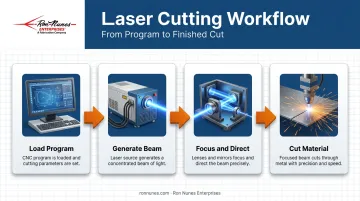
Here's the basic workflow:
- Load the program – The CNC system converts a CAD file into machine instructions specifying the part geometry and cutting parameters
- Generate the beam – The laser source produces the beam at the power level set for the material and thickness
- Focus and direct – Mirrors (in CO2 systems) or fiber optic cable route the beam to the cutting head, where a lens focuses it to a precise point
- Cut the material – The head moves along the programmed path while assist gas clears molten material from the kerf
The Role of Assist Gas
Assist gas isn't optional. It clears molten metal from the cut and shapes the final edge quality:
- Oxygen – Common for thicker mild steel; the exothermic reaction adds cutting energy, though it can leave an oxidized edge that needs finishing
- Nitrogen – Standard for stainless steel and aluminum; high-pressure inert gas ejects melt and leaves a clean, oxide-free edge
- Compressed air – A lower-cost option for thinner material, typically effective on mild steel around 7 gauge and thinner
Matching gas type to material thickness affects both cutting speed and edge quality, a detail that matters before parts move into welding, plating, or other finishing steps.
Is Laser Cutting a CNC Process?
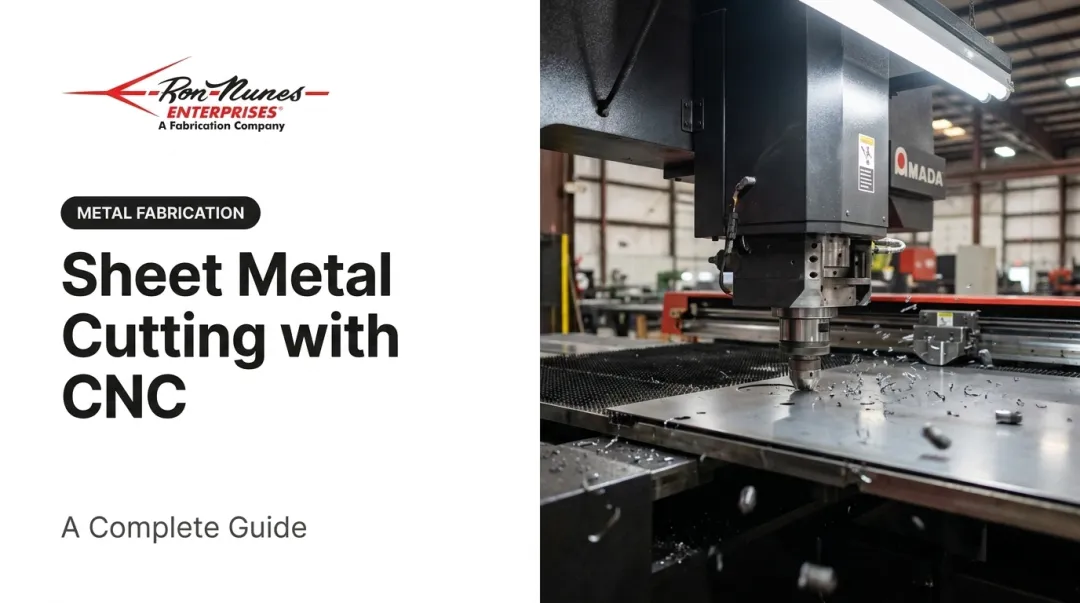
Yes. Laser cutting machines run on Computer Numerical Control (CNC) systems that interpret part programs to control beam movement, cutting speed, and power output. This is what makes laser cutting repeatable across a production run of 5 parts or 5,000 — the machine executes the same path every time, without the tool wear that affects mechanical cutting methods. This reliability is also why manufacturers like Ron Nunes Enterprises apply laser cutting across custom fabrication work, from prototype development through full production runs.
How Does a Laser Cutter Avoid Cutting Itself?
This is a fair question if you're picturing a beam powerful enough to slice steel. The answer comes down to precise calibration, not a single safety switch.
- Focal control – Optics concentrate the beam's energy only at the programmed focal point on the material surface
- Nozzle standoff distance – The cutting head maintains a fixed, monitored gap from the workpiece
- Enclosed beam path – Protective windows and sealed optics keep stray energy contained
- Collision prevention – Modern systems actively reroute the head around tipped or misaligned parts before contact occurs
Types of Laser Cutting Technology
Three laser types dominate metal fabrication, and each has a distinct niche.
| Laser Type | Best For | Trade-offs |
|---|---|---|
| CO2 | Versatile cutting of metals and non-metals, good edge quality on plate | Requires mirror alignment and more maintenance |
| Fiber | Reflective metals, thin-to-mid sheet, high-speed production | Sealed beam path, lower operating cost, less effective on some thick plate applications |
| Nd:YAG | High-precision, thicker metal applications | Less energy-efficient, generates more waste heat |
Fiber laser technology has become the industry preference for metal fabrication. Manufacturer comparisons show fiber lasers cutting material under half an inch up to five times faster than CO2 systems, at roughly half the operating cost. That speed and efficiency advantage is a big reason shops have shifted their equipment investments toward fiber over the past decade.
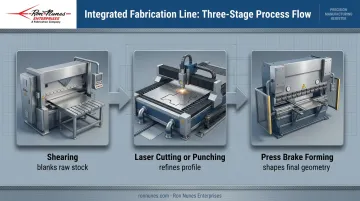
That efficiency shapes how Ron Nunes Enterprises sequences its own fabrication line, where laser cutting works alongside shearing, N/C punching, and press brake forming:
- Shearing blanks the raw stock first, establishing basic sheet dimensions.
- Laser cutting or punching refines the profile based on part complexity.
- Press brake forming shapes the final geometry, completing the part without shipping between vendors.
Machine configuration also affects speed. Flying optics systems keep the workpiece stationary while the cutting head moves, reducing mass and enabling faster acceleration. Fixed-optics systems move the material instead, which can limit speed on larger, heavier sheets.
What Materials Can (and Can't) Be Laser Cut?
Laser cutting handles a wide range of metals used in industrial fabrication:
- Carbon steel – Common for structural brackets and enclosures
- Stainless steel – Frequent choice for corrosion-resistant components
- Aluminum – Including alloys like 6061-T6 and 5052-H32, widely used in rack chassis and lightweight assemblies
- Brass and copper – Cuttable, though their reflectivity requires the right laser type and power settings
Sheet metal, tubing, and precision components across these materials all fall within standard laser cutting capability. Ron Nunes Enterprises applies laser cutting to steel, stainless steel, and aluminum stock for exactly this kind of work, producing intricate profiles and clean edges for rack mount and custom fabrication orders.
Beyond metal, laser cutters can also process plastics and other non-metal materials, though that's a secondary use case for most industrial fabrication shops focused on metal parts.
Materials to approach with caution:
- PVC – Releases toxic, corrosive chlorine gas when cut with a laser
- Certain foams (polystyrene, polypropylene) – Prone to ignition risk
- Fiberglass and resin composites – Emit hazardous particulates that require specialized filtration
Proper ventilation isn't a nice-to-have here. OSHA requires adequate ventilation systems to manage fumes and vapors generated during laser cutting operations.
Key Applications of Laser Cutting Across Industries
Laser-cut metal components show up anywhere tight tolerances and repeatable quality matter more than low-volume convenience.
Defense and national security: Fabrication for this sector demands precise tolerances and documented material traceability. Ron Nunes Enterprises supports this with compliance to standards like MIL-C-5541E chromate conversion finishes and material specifications including QQ-A-250/11 and ASTM B209, which trace back to federal procurement requirements.
Semiconductor, telecom, and communications: Custom rack mount chassis and enclosures rely on precisely laser-cut sheet metal to house sensitive equipment. Standard 19-inch rack chassis, built to EIA-310d dimensional standards, appear throughout data center and networking hardware installations.
Medical and transportation: Both sectors demand tight documentation and consistent tolerances across production runs. Ron Nunes Enterprises has supported these exact market segments for over 55 years, handling custom fabrication from single prototypes through full production quantities.
Across these sectors, common part types produced through laser cutting include:
- Custom card cages for test and measurement equipment
- Structural brackets and chassis panels
- MIL-spec finished enclosures for government lab and defense applications
- Rack mount chassis components in 1U to 9U configurations
Advantages of Laser Cutting for Precision Fabrication
Three benefits explain why laser cutting has become the go-to process for precision metal parts.
Tight, repeatable tolerances. A laser beam doesn't wear down like a physical cutting tool, so the hundredth part off the line matches the tolerance of the first. Independent comparisons put laser cutting's tolerance advantage over plasma at roughly 0.01 inch, though plasma wins out on plate thicker than 5/8 inch.
Speed and turnaround. Laser cutting supports fast prototyping alongside production runs, since there's no tooling changeover between part geometries. Ron Nunes Enterprises builds this into its service model, guaranteeing stock chassis items ship within 3 working days and custom fabrication within 15 working days.
Clean edges, less rework. A narrow heat-affected zone means less warping and fewer burrs compared to other thermal cutting methods, which cuts down on secondary finishing steps like deburring or edge grinding.
For parts under 5/8 inch where precision and complexity matter more than raw thickness, laser cutting beats punching and plasma on tolerance, speed, and edge quality.
Frequently Asked Questions
How does laser cutting technology work?
A CNC-guided, focused laser beam melts, burns, or vaporizes material along a programmed path. Assist gas clears molten material from the cut to produce a clean edge.
Is laser cutting a CNC process?
Yes. Laser cutters use CNC systems to control beam movement, speed, and power output with high repeatability across production runs of any size.
How does a laser cutter avoid cutting itself?
Precise focal length control, monitored nozzle standoff distance, and enclosed beam paths keep the laser's cutting energy concentrated only at the material's surface, not on internal components.
What materials can be cut with a laser cutter?
Common industrial materials include carbon steel, stainless steel, aluminum, brass, and copper. Some non-metals like plastics can also be cut, though metal fabrication is the primary industrial use.
How thick of a material can a laser cutter cut?
Thickness capacity depends on laser type and power. Higher-powered fiber systems can cut mild steel well beyond an inch thick, while lower-powered machines handle thinner gauge sheet more efficiently.
Is laser cutting more precise than other cutting methods?
Yes, laser cutting typically holds tighter tolerances and produces cleaner edges than plasma cutting or punching, particularly on thinner to mid-range material thicknesses.
Looking for a fabrication partner who handles laser cutting alongside shearing, punching, and forming under one roof? Ron Nunes Enterprises has supported precision metal fabrication for defense, medical, semiconductor, and telecom customers from Livermore, California since 1969.